
Book Appointment Now

NCCT Scan
Fast, painless, high-resolution 3D cross-sectional imaging without intravenous dye.
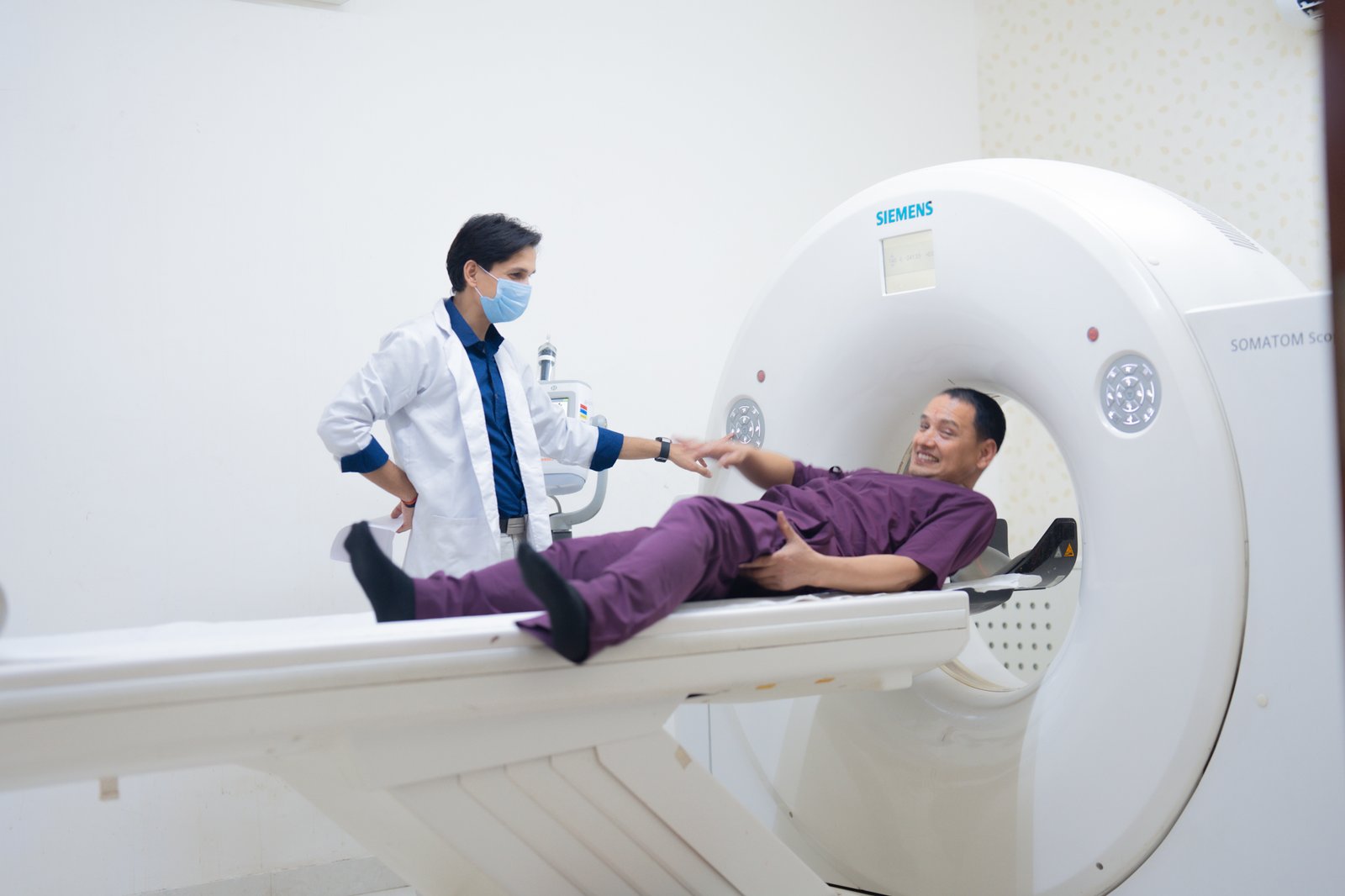
Non-Contrast Computed Tomography (NCCT Scan)
A CT scan performed without any injected contrast dye, capturing detailed cross-sectional images of bones, organs and tissues. Commonly used for head trauma, kidney stones, and quick emergency assessments.
Technology:
32-Slice Low-Dose CT
32-Slice Low-Dose CT
Scan Duration:
5–10 Minutes
5–10 Minutes
Fasting:
Not Required
Not Required
Report Delivery:
Within 1 Hours
Within 1 Hours
Commonly Booked Tests
What to expect
You’ll lie on a table that slides into a doughnut-shaped scanner. The scan itself is quick and involves no injections.
Prep Instructions
No fasting required in most cases. Remove metal objects and jewellery. Wear comfortable clothing. Inform staff if you are or may be pregnant.
FAQ’s
Do I need to fast or undergo a blood test (Creatinine) before an NCCT?
No. Since no contrast dye is administered during an NCCT, fasting is generally not required (unless paired with specific abdominal protocols), and serum creatinine blood test reports are not mandatory.
What is the main difference between NCCT and CECT?
An NCCT scan does not use any injected contrast dye, relying purely on natural tissue density differences. A CECT scan involves injecting an iodinated contrast agent into a vein to highlight vascular structures, tumors, and subtle soft-tissue inflammation. NCCT is faster, requires no kidney function blood tests (KFT/Creatinine), and carries zero risk of allergic dye reactions.
Is an NCCT scan safe? What about radiation exposure?
Yes, NCCT is safe. Modern imaging centers utilize ultra-low-dose multi-slice CT technology equipped with AI dose-reduction software, keeping radiation exposure to the minimum clinically required level. However, if you are pregnant or suspect you might be pregnant, please inform our medical team beforehand.
Can I get an NCCT scan done if I have metal implants or a pacemaker?
Yes! Unlike MRI machines which use strong magnetic fields, CT scans use X-ray technology. Pacemakers and metallic surgical implants are safe inside a CT room, though metal near the exact scan area may create slight image artifacts.