Book Appointment Now

CECT vs NCCT: What’s the Difference? A Complete Guide
Learn the difference between CECT and NCCT scans, when each is recommended, preparation, safety, and what to expect at a diagnostic imaging centre in Safdarjung Enclave.
CECT vs NCCT: Understanding the Difference
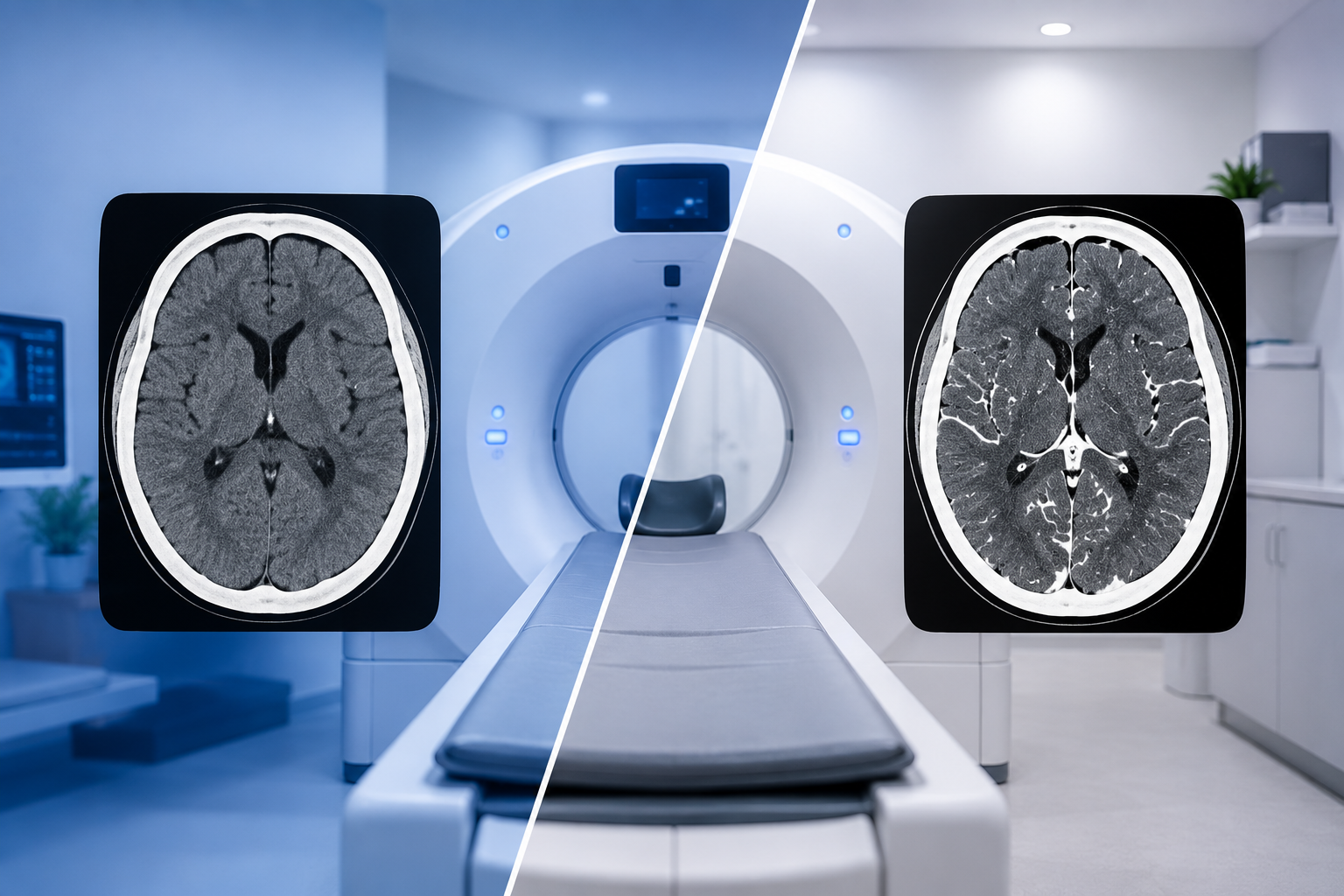
When your doctor recommends a CT scan, you may notice terms like CECT and NCCT on the prescription. While both use advanced CT technology to produce detailed images of the body’s internal structures, the key difference lies in the use of contrast material.
Understanding this difference helps patients prepare better and know what to expect before the scan.
What is an NCCT Scan?
NCCT stands for Non-Contrast Computed Tomography.
This scan is performed without any contrast dye and is commonly used when natural tissue differences are enough to identify abnormalities.
Doctors commonly recommend NCCT for:
- Kidney stones
- Brain hemorrhage
- Head injuries
- Sinus evaluation
- Bone fractures
- Lung assessment
NCCT is usually quicker because no contrast injection is required.
What is a CECT Scan?
CECT stands for Contrast Enhanced Computed Tomography.
A special iodine-based contrast dye is injected into a vein to improve visibility of organs, blood vessels and soft tissues.
CECT is commonly recommended for:
- Cancer diagnosis
- Tumor evaluation
- Liver diseases
- Pancreatic disorders
- Abdominal pain
- Vascular diseases
- Infection detection
- Trauma assessment
The contrast helps radiologists identify abnormalities that may not be visible on a regular CT scan.
CECT vs NCCT: Quick Comparison
| NCCT | CECT |
| No contrast used | Contrast injection required |
| Faster procedure | Slightly longer |
| Ideal for stones and bleeding | Better for tumors and organs |
| No allergy concerns | Requires allergy assessment |
Is Contrast Safe?
Contrast agents used today are considered very safe.
However, inform your radiologist if you have:
- Kidney disease
- Diabetes
- Previous contrast allergy
- Pregnancy
- Thyroid disorders
Your doctor may recommend kidney function tests before the examination.
How Should You Prepare?
For NCCT
- Usually no fasting required
- Wear comfortable clothing
- Bring previous imaging reports
For CECT
- Fast for 4–6 hours (if advised)
- Stay hydrated
- Carry kidney function reports if available
- Inform staff about allergies or medications
How Long Does a CT Scan Take?
- NCCT: 5–10 minutes
- CECT: 20–30 minutes including preparation
Patients can usually resume normal activities immediately unless advised otherwise.
Which Scan Will My Doctor Recommend?
The choice depends entirely on your medical condition.
Your radiologist and referring physician decide whether contrast is necessary based on:
- Symptoms
- Medical history
- Previous investigations
- Clinical diagnosis
Never request one type over another without medical advice.
Why Choose a Diagnostic Imaging Centre in Safdarjung Enclave?
Choosing an experienced imaging centre like Healthcare Ultrasound and Diagnostics ensures:
- Advanced multi-slice CT technology
- Experienced radiologists
- Accurate reporting
- Fast appointment scheduling
- Patient safety protocols
- Convenient South Delhi location
Frequently Asked Questions
Is CECT more accurate than NCCT?
Not always. Each scan has different clinical applications.
Is contrast painful?
Only the injection is felt. You may experience a brief warm sensation.
Can I eat after a CECT scan?
Yes. Drinking plenty of water is encouraged.
Is radiation the same?
Both scans use similar CT technology. The dose depends on the body part being examined.
Conclusion
Both CECT and NCCT are valuable diagnostic tools. The appropriate scan depends on the medical condition being evaluated. Consulting an experienced radiologist ensures you receive the most suitable imaging examination.