Book Appointment Now

Breast Cancer Screening by Age: When to Get a Mammogram?
Breast cancer is one of the most common cancers affecting women worldwide. The encouraging news is that early detection through regular screening significantly improves treatment outcomes and survival rates.
A mammogram is one of the most effective tools for detecting breast cancer, often identifying changes before a lump can be felt. But one of the most common questions women ask is:
“At what age should I start getting a mammogram?”
The answer depends on several factors, including your age, family history, personal risk factors, and your doctor’s advice.
In this guide, we’ll explain breast cancer screening recommendations by age and help you understand when a mammogram may be appropriate.
What is a Mammogram?
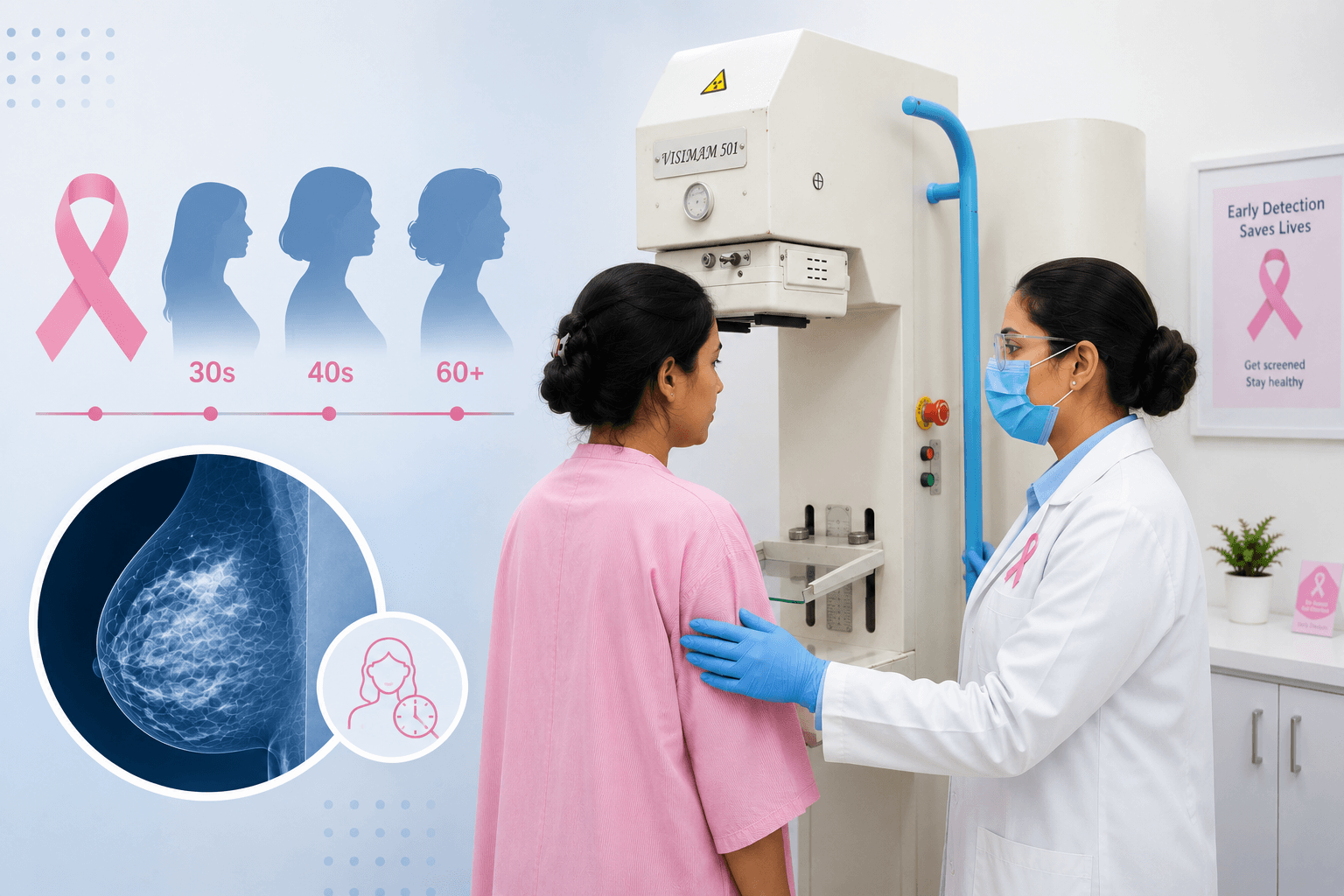
A mammogram is a specialized low-dose X-ray of the breast used to detect early signs of breast cancer and other breast abnormalities.
Modern Digital Mammography provides high-quality images that help radiologists identify tiny changes in breast tissue, often before symptoms appear.
Mammography can detect:
- Small breast cancers
- Microcalcifications
- Breast masses
- Cysts
- Architectural distortion
- Early-stage breast abnormalities
Why Early Screening Matters
Breast cancer often develops without noticeable symptoms in its early stages.
Regular screening can help:
- Detect cancer before it spreads
- Improve treatment success
- Reduce the need for extensive surgery
- Increase long-term survival
- Provide reassurance when results are normal
Many women diagnosed through routine screening have no pain, lump, or visible changes in their breasts.
Breast Cancer Screening by Age
Women Under 40
Routine mammography is not usually recommended for women at average risk below the age of 40.
However, your doctor may advise earlier screening if you have:
- A strong family history of breast cancer
- Known BRCA1 or BRCA2 gene mutations
- Previous chest radiation at a young age
- A history of certain high-risk breast conditions
Women of all ages should be familiar with the normal look and feel of their breasts and promptly report any new changes to their healthcare provider.
Women Aged 40–49
Many healthcare organizations recommend discussing the benefits and timing of mammography with your doctor beginning in your 40s.
Your doctor may recommend screening based on:
- Personal risk factors
- Family history
- Breast density
- Overall health
For women at higher risk, annual screening may be advised.
Women Aged 50–74
For many women at average risk, regular mammography during this age group is an important part of preventive healthcare.
Depending on individual circumstances and medical guidance, your doctor may recommend screening every one to two years.
Regular screening during these years has been shown to improve the chances of detecting breast cancer at an earlier, more treatable stage.
Women Over 75
The decision to continue breast cancer screening should be individualized.
Your doctor will consider:
- Overall health
- Life expectancy
- Existing medical conditions
- Personal preferences
- Previous screening history
Some women may continue to benefit from mammography beyond the age of 75.
Women at Higher Risk May Need Earlier Screening
You may need to begin breast cancer screening before the age of 40 if you have:
- Mother, sister, or daughter diagnosed with breast cancer
- BRCA gene mutation
- Previous breast biopsy showing high-risk changes
- Personal history of breast cancer
- Prior chest radiation therapy
- Genetic syndromes associated with breast cancer
Your doctor may recommend additional imaging, such as breast ultrasound or MRI, alongside mammography based on your individual risk profile.
Signs You Should Never Ignore
While mammography is a screening test, it is important to seek medical attention if you notice:
- A new breast lump
- Persistent breast pain
- Nipple discharge (especially bloody discharge)
- Skin dimpling or thickening
- Changes in breast size or shape
- Inverted nipple
- Swelling in the armpit
These symptoms do not always indicate cancer but should be evaluated promptly.
How to Prepare for a Mammogram
Preparing for a mammogram is simple:
- Schedule the examination when your breasts are least tender, if possible.
- Avoid applying deodorant, talcum powder, lotions, or perfumes on the underarms or breasts on the day of the scan, as these can appear on the images.
- Wear a comfortable two-piece outfit for convenience.
- Bring any previous mammogram reports or breast imaging studies for comparison.
- Inform the technologist if you are pregnant, breastfeeding, or have breast implants.
Is Mammography Painful?
Most women experience only mild discomfort during the examination.
The breast is gently compressed for a few seconds to obtain clear images. This compression is essential for image quality and helps reduce the radiation dose.
The entire procedure usually takes 15 to 20 minutes.
Is Mammography Safe?
Yes.
Mammography uses a very low dose of X-rays, and the benefits of early detection generally outweigh the minimal radiation exposure for women who are advised to undergo screening.
Modern digital mammography systems are designed to use the lowest radiation dose necessary while producing high-quality diagnostic images.
Frequently Asked Questions
How often should I get a mammogram?
The appropriate screening interval depends on your age, overall health, and individual risk factors. Your doctor will recommend a schedule that is right for you.
Can younger women develop breast cancer?
Yes. Although breast cancer is less common in younger women, it can occur, especially in those with significant genetic or family risk factors.
What if my mammogram is abnormal?
An abnormal result does not necessarily mean cancer. Additional imaging, such as a diagnostic mammogram, breast ultrasound, or occasionally an MRI, may be recommended to clarify the findings.
Is mammography enough for women with dense breasts?
Women with dense breast tissue may require supplementary imaging, such as ultrasound or MRI, depending on their individual risk assessment and their doctor’s recommendation.
Why Choose an Experienced Breast Imaging Centre?
The accuracy of mammography depends not only on the technology used but also on the expertise of the radiology team.
A dedicated breast imaging center offers:
- Advanced Digital Mammography systems
- Experienced radiologists specializing in breast imaging
- High-quality image interpretation
- Comfortable and patient-focused care
- Timely and reliable reporting
- Comprehensive breast imaging services under one roof
Conclusion
Regular breast cancer screening is one of the most effective ways to detect breast cancer early, often before symptoms appear. The appropriate age to begin mammography depends on your individual risk factors, medical history, and your healthcare provider’s advice.
If you’re unsure when to start screening or are due for your next mammogram, speak with your doctor and schedule your examination at a trusted diagnostic imaging center.